Source Brookfield Hot Mix Asphalt Viscometer for Labs, Plants, and Construction
Find 30 Brookfield Hot Mix Asphalt Viscometer options with rotary measurement capabilities and temperature control ranging from room temperature to 300 Celsius. Buyers can compare specifications including viscosity ranges, accuracy, and packing details from verified suppliers in China.
Key considerations
Products List




Comprehensive Sourcing Guide
Strategic Sourcing Guide for Brookfield Hot Mix Asphalt Viscometers
Understanding the Technical Landscape of Rotational Viscometry
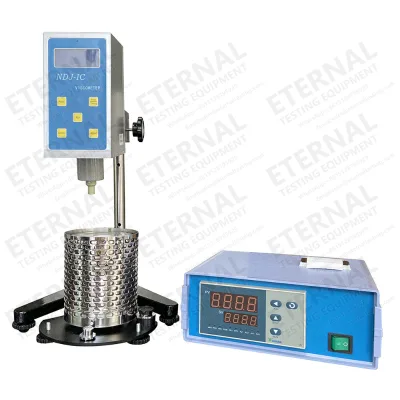
The procurement of a Brookfield Hot Mix Asphalt Viscometer requires a precise understanding of the underlying rotational viscometry principles used to characterize high-viscosity fluids. In the context of asphalt testing, these instruments are designed to measure the viscosity of hot mix asphalt at elevated temperatures, a critical parameter for ensuring proper workability and compaction during road construction. The core mechanism relies on a rotary viscometer type, where a spindle or rotor is immersed in the fluid and rotated at a controlled speed. The resistance to this rotation, caused by the fluid's viscosity, is measured and converted into a viscosity value.
Buyers must distinguish between different operational modes and configurations available in the market. The supplied data indicates that these instruments often feature an automatic test mode, which streamlines the data acquisition process and reduces human error during repetitive testing cycles. The speed of the rotor is a fundamental variable, with observed configurations offering specific rotational speeds of 5, 10, 20, and 50 revolutions per minute (R/Min). This range allows for the measurement of fluids across a broad spectrum of viscosities, which is essential for asphalt samples that can vary significantly based on their chemical composition and temperature.
The measuring error and reproducibility are critical metrics for any laboratory equipment. For these specific rotary viscometers, the accuracy is often cited with a tolerance of ±1.5%, while the measuring error is noted as ±1% of the full scale (F-S). Reproducibility, which indicates the consistency of results across multiple tests, is a vital factor for quality assurance. Observed specifications suggest reproducibility values of ±0.5% for general models and as tight as ±0.2% for specialized units. When sourcing, buyers should verify that the specific unit they are purchasing meets the reproducibility standards required by their local regulatory bodies or internal quality protocols.
Critical Technical Specifications and Performance Parameters
When evaluating a Brookfield Hot Mix Asphalt Viscometer, the technical specifications must align with the intended testing environment and the physical properties of the samples. The viscosity measurement range is a primary consideration, with observed data indicating a capability spanning from 100 to 200,000 mPa·s. This wide range accommodates the high-viscosity nature of asphalt binders, particularly when they are in a molten state. Some configurations may also reference a maximum measurement range expressed in different units, such as 4D-5D, which buyers should clarify to ensure compatibility with their specific testing standards.
Temperature control is arguably the most critical technical aspect of asphalt viscometry. Asphalt viscosity is highly temperature-dependent, and even minor fluctuations can lead to significant variations in measured values. The instruments typically feature a temperature controlling range that extends from room temperature up to 300 degrees Celsius. For specific applications, a temperature control range of 45°C to 200°C is observed, with an optional 300°C heater available for higher-temperature requirements. The precision of this control is equally important; specifications indicate a temperature control precision of +0.1°C and a resolution of 0.1°C. This level of granularity ensures that the sample is maintained at the exact target temperature required by testing protocols.
The physical characteristics of the viscometer also influence the procurement decision. The weight of the unit is a significant factor for installation and stability, with observed values around 25kg for the main assembly. However, the gross weight of the packaged unit may vary, with some configurations listed at 11kg, likely referring to specific components or smaller benchtop models. The ambient relative humidity tolerance is noted as ≤80%, which is a standard operating condition for most laboratory environments. Buyers should ensure their facility meets these environmental requirements to prevent equipment malfunction or measurement drift.
Compliance, Standards, and Certification Verification
In the realm of asphalt testing, compliance with international and national standards is non-negotiable. While specific certification documents are not explicitly detailed in the provided product facts, the existence of standardized testing procedures implies that the equipment must be capable of meeting rigorous performance criteria. The product origin is identified as China, with specific manufacturing locations noted in Chongqing. This geographical information is relevant for supply chain logistics but does not inherently dictate the quality or compliance status of the instrument.
Buyers must verify that the viscometer conforms to the relevant standards for asphalt testing, such as those established by ASTM or AASHTO. The supplied data mentions a product standard described by dimensions (e.g., 400x400x300mm), which likely refers to the physical footprint or packaging standard rather than a technical testing standard. It is crucial for procurement teams to request documentation confirming that the instrument's performance, including accuracy and temperature control, has been validated against the specific standard required for their jurisdiction.
Furthermore, the distinction between different types of density meters and viscometers is essential for compliance. The market includes transmission-type density meters and vibrating density meters, as well as radioisotope density meters. A Brookfield viscometer is specifically a rotary device and should not be confused with density measurement tools unless the system is a combined unit. Buyers must ensure that the purchased instrument is explicitly a Brookfield Rotational Viscometer or a Hot Mix Asphalt Viscometer designed for the specific test mode required, such as the automatic test mode observed in the data.
Cost Drivers and Pricing Dynamics
The pricing of Brookfield Hot Mix Asphalt Viscometers is influenced by a complex array of factors, including the complexity of the temperature control system, the precision of the measurement electronics, and the included accessories. The observed listed price range in the market spans from 1 to 12,000 USD. This wide disparity suggests that the market includes both basic manual units and highly automated, precision-engineered systems with advanced features.
Several key cost drivers contribute to this variance. First, the temperature control range is a significant factor; units capable of reaching 300°C with high precision (+0.1°C) will command a higher price than those limited to 200°C. Second, the inclusion of optional parts, such as a 300°C heater, will increase the total cost. Third, the level of automation, such as the automatic test mode, adds value and cost compared to manual operation models.
The Minimum Order Quantity (MOQ) for these instruments is observed to be 1, indicating that buyers can purchase single units without needing to commit to bulk orders. This flexibility is beneficial for laboratories that need to replace a single failing unit or expand their testing capacity incrementally. However, buyers should be aware that the low MOQ does not necessarily imply low unit costs; the price per unit is driven by the specific configuration and features selected.
Typical Applications and Operational Scope
The primary application of the Brookfield Hot Mix Asphalt Viscometer is the characterization of high-viscosity liquids and fluids, specifically asphalt binders used in road construction. The instrument is designed to test samples under conditions that simulate the hot mix process, ensuring that the asphalt has the correct viscosity for mixing and compaction. The working temperature of the bath typically ranges from room temperature to 240°C, with some models extending to 300°C, allowing for comprehensive testing across the entire processing temperature range of asphalt.
Beyond asphalt, the versatility of rotary viscometers allows for applications in other industries requiring viscosity measurement of high-viscosity fluids. However, for the specific context of the core keyword, the focus remains on hot mix asphalt. The instrument's ability to handle a viscosity measurement range of 100 to 200,000 mPa·s makes it suitable for a wide variety of asphalt grades, from soft binders used in cold climates to stiff binders used in hot regions.
The working mode of the instrument, such as double lines or parallel test capabilities, can enhance throughput in high-volume laboratories. The receiving flask capacity, noted as 60ml in some configurations, is a practical detail that affects sample preparation and waste management. Buyers should consider the sample size requirements of their specific testing protocols to ensure the instrument's capacity aligns with their operational needs.
Supplier Evaluation and Quality Control Protocols
Evaluating suppliers for Brookfield Hot Mix Asphalt Viscometers requires a rigorous approach to quality control and after-sales support. The supply chain for these instruments often originates from China, with specific manufacturing hubs in Chongqing. Buyers should verify the supplier's ability to provide a warranty or guarantee, with a standard term of 1 year observed in the market. This warranty should cover defects in materials and workmanship, ensuring protection for the initial investment.
Service availability is another critical factor. The data indicates that suppliers may offer engineers available to service machinery overseas, which is a valuable asset for international buyers. This service capability ensures that any technical issues can be resolved promptly, minimizing downtime in the laboratory. Buyers should inquire about the specific terms of this service, including response times, travel costs, and the availability of spare parts.
Quality control during the procurement process should include a verification of the instrument's specifications against the order requirements. This includes checking the rotor speed settings, temperature control accuracy, and the physical dimensions of the unit. The packing method, often a wooden box or veneer case, is also a quality indicator, as proper packaging is essential for protecting the delicate components during transit. Buyers should inspect the packaging upon delivery to ensure that the instrument has not suffered any damage during shipping.
Long-Term Procurement and Maintenance Considerations
Long-term procurement strategies for Brookfield Hot Mix Asphalt Viscometers must account for the total cost of ownership, including maintenance, calibration, and potential upgrades. The instrument's accuracy and reproducibility can degrade over time if not properly maintained. Regular calibration is essential to ensure that the viscosity measurements remain within the specified tolerance of ±1.5% accuracy and ±0.5% reproducibility. Buyers should establish a schedule for calibration and verify that the supplier or a third-party service provider can perform these services.
The availability of spare parts is another long-term consideration. The rotor specifications, which may include 4 different sizes, suggest that a variety of rotors may be needed for different testing scenarios. Buyers should ensure that the supplier can provide a steady supply of replacement rotors and other consumables. Additionally, the optional parts, such as the 300°C heater, should be evaluated for their longevity and ease of replacement.
The environmental conditions in which the instrument operates, such as ambient relative humidity ≤80%, should be monitored to prevent long-term damage. Proper storage and handling, including the use of the provided wooden case for transport, will help extend the lifespan of the equipment. By adopting a proactive approach to maintenance and support, buyers can ensure that their Brookfield Hot Mix Asphalt Viscometer continues to deliver reliable and accurate results for years to come.
Comparative Analysis of Instrument Configurations
To assist buyers in making informed decisions, the following table summarizes the key differences observed in the product specifications. This comparison highlights the variations in temperature control, measurement ranges, and physical attributes that may influence the final procurement choice.
| Feature | Configuration A | Configuration B | Configuration C |
|---|---|---|---|
| Viscometer Type | Rotary | Rotary | Rotary |
| Temperature Range | Room Temp to 300°C | 45°C to 200°C | Ambient to 200°C |
| Temp Control Precision | +0.1°C | 0.1°C | 0.1°C |
| Viscosity Range | 100~200,000 mPa·s | 100~200,000 mPa·s | 100~200,000 mPa·s |
| Rotor Speeds | 5, 10, 20, 50 R/Min | 5, 10, 20, 50 Rpm | 5, 10, 20, 50 R/Min |
| Accuracy | ±1.5% | ±1.5% | ±1.5% |
| Reproducibility | ±0.5% | ±0.2% | ±0.5% |
| Weight | 25kg | 11kg (Gross) | 25kg |
| Packing | Wooden Box | Veneer Case | Wooden Case |
| Optional Parts | 300°C Heater | None | 300°C Heater |
This table illustrates that while the core functionality remains consistent across configurations, the temperature capabilities and physical attributes vary significantly. Buyers should select the configuration that best matches their specific testing requirements and laboratory infrastructure.
FAQs
What is the accuracy of the Brookfield Hot Mix Asphalt Viscometer?
The accuracy is typically ±1.5% with a measuring error of ±1% of full scale. This precision ensures reliable viscosity measurements for high-viscosity asphalt fluids during standard testing procedures.
Can the viscometer operate at temperatures up to 300 degrees Celsius?
Yes, the instrument features a temperature controlling range from room temperature to 300 degrees Celsius. An optional 300°C heater is available to meet specific high-temperature testing requirements for hot mix asphalt.
Which rotor speeds are available for measuring asphalt viscosity?
The device offers rotor speeds of 5, 10, 20, and 50 revolutions per minute. These specific speeds allow for accurate measurement across a broad viscosity range from 100 to 200,000 mPa·s.
How is the temperature control precision maintained during testing?
Temperature control precision is maintained at +0.1°C with a resolution of 0.1°C. This high granularity ensures the sample remains at the exact target temperature required by testing protocols.
What is the minimum order quantity for purchasing this viscometer?
The minimum order quantity is 1 unit, allowing buyers to purchase single instruments without bulk commitments. This flexibility supports laboratories needing to replace units or expand capacity incrementally.
Where are the manufacturers of these viscometers located?
Manufacturers are located in China, with specific production hubs identified in Chongqing. This geographical origin influences supply chain logistics and shipping considerations for international buyers.
What warranty coverage is provided for the equipment?
A standard warranty or guarantee of 1 year is provided for the viscometer. This coverage protects against defects in materials and workmanship during the initial period of operation.